


Understanding Symbolism, Identity, and Community: Symbolism plays a meaningful role within the BDSM community. These symbols communicate shared values, identity, and belonging—often quietly and discreetly. This guide explores some of the most widely recognized BDSM symbols, their history, and why they continue to matter today.
Why Are Symbols Important in BDSM?
Symbols have long been used across cultures to express identity and shared understanding. Within BDSM, symbols serve an especially important purpose: they allow people to recognize one another and signal awareness or affiliation without needing open discussion.
Common uses include:
Jewelry or subtle accessories
Tattoos
Clothing designs or pins
Online profile imagery
To outsiders, these symbols may appear abstract or decorative. Within the community, they function as a shared visual language rooted in trust, consent, and mutual respect.

What Does the BDSM Triskelion Look Like?
The BDSM triskelion is a circular symbol divided into three curved, swirling segments. It is most commonly displayed in black on a white background and resembles a three-spoked wheel contained within a circle.
Origins of the BDSM Triskelion
The modern BDSM triskelion was created in the mid-1990s by Steve Quagmyr during an online discussion. The design was inspired in part by The Story of O, which describes a ring engraved with a three-spoked wheel.
The symbol also echoes ancient triskelion imagery found in multiple cultures, where it often represents balance, motion, and unity.
What Does the BDSM Triskelion Mean?
There is no single, fixed interpretation. Instead, the symbol is intentionally layered, allowing individuals to find personal meaning. Common interpretations include:
The BDSM acronym
Bondage & Discipline
Dominance & Submission
Sadism & Masochism
Core consent frameworks
Safe, Sane, and Consensual (SSC)
Risk-Aware Consensual Kink (RACK)
Recognized roles within BDSM
Dominant
submissive
switch
According to its creator, the black color symbolizes seriousness and restraint, the curved lines suggest motion and energy, and the enclosing circle represents unity within the community.
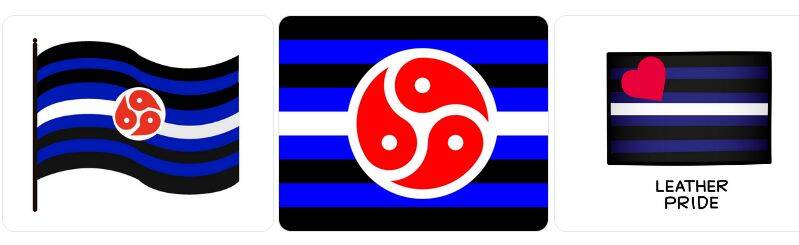
The BDSM Rights Flag
Another prominent symbol is the BDSM Rights Flag, created in 2005 by Tanos, founder of BDSM Rights.
Design Elements
The flag features:
Nine horizontal stripes alternating black and blue
A thick white stripe across the center
A red BDSM triskelion inside a white circle
The color scheme intentionally references the Leather Pride Flag, a long-standing emblem within leather, fetish, and BDSM communities.
Purpose and Meaning
The BDSM Rights Flag emphasizes:
Consent as a foundational principle
Visibility without sensationalism
Advocacy for dignity, autonomy, and rights
Rather than symbolizing specific activities, the flag represents shared values and ethical responsibility.
Other BDSM Symbols You May Encounter
In addition to the triskelion and BDSM Rights Flag, several other symbols are commonly recognized:
Collars
Collars are often worn as jewelry and may symbolize commitment, responsibility, or an acknowledged dynamic within a relationship. Outside the community, they may simply appear as fashion accessories.
The Leather Pride Flag
Created in 1989, this flag features black, blue, and white stripes with a red heart. It is widely associated with leather and BDSM communities and remains a foundational cultural symbol.
The Handkerchief Code
Originating in gay leather culture, colored handkerchiefs were historically used to indicate interests or preferences. Today, this system is largely symbolic and educational, representing shared history rather than active signaling.
How BDSM Symbols Are Used Today
Modern use of BDSM symbolism tends to be intentional and discreet. Common examples include:
Triskelion jewelry worn beneath everyday clothing
Minimalist tattoos incorporating BDSM iconography
Profile images or icons in online communities
Subtle displays at social or educational gatherings
For many, these symbols provide a sense of reassurance, recognition, and connection.
Symbolism as a Shared Language
BDSM symbols function as a quiet but powerful language. They communicate consent, trust, responsibility, and belonging—often without words. In a society where BDSM is frequently misunderstood, these symbols help preserve community identity, history, and shared values.
They are not about provocation, but about connection.
Add comment
Comments